The Luxurious History Of The Pineapple

When you want to be healthy and eat something a little exotic, why not have some pineapple? This fruit is a bit more exciting than the apples and oranges you see everywhere, and it can do plenty of good for your body. Not only does it contain antioxidants and help with digestion, but it can also apparently boost your immunity and may even lower your risk of developing cancer.
If that's not enough, pineapples are also a fruit with a very intriguing backstory. There was apparently a time when one of these could sell for $8,000 in today's money. It's not something we'd expect, given how much they tend to cost at the grocery store. However, once you know the luxurious history of the pineapple, it makes a little more sense.
Christopher Columbus brought pineapples over from the Caribbean to Spain
Pineapples stem from South America, but they're also grown in the Caribbean and parts of tropical Asia as well. It was in the former on the island of Guadeloupe where Christopher Columbus reportedly first encountered them in the 1490s. Intrigued by the food, he brought it with him when he traveled back to Spain, and it appears his offerings went down a treat. The fruit was so popular that there were naturally efforts to grow them in Europe. However, the lack of a tropical climate meant that little progress was made in this regard. In order to satisfy their newfound taste for this food, Europeans had to start importing pineapples across the Atlantic Ocean. However, this procedure was not as smooth as it is today, meaning the stock was usually in a bad way when it eventually arrived.

Only the rich could afford pineapples in Europe and North America
Although Europe didn't have a tropical climate with which people could grow pineapples, Europeans were eventually able to create the right environment. During the 17th century, hothouses popped up in places like England and the Netherlands that provided the right conditions to grow the food. However, the amount these hothouses produced failed to match the excessive demand for them. As a result, it was generally only the wealthy who got to enjoy them. Noble names like Louis XV, Charles II, and Catherine the Great got an exotic snack while many of their people went without. This led the pineapple to become a symbol of luxury and opulence, and that wasn't only the case in Europe. There was just as much demand in North America, meaning you also had to be rich if you wanted a pineapple there, too.
People used pineapples as status symbols, sometimes renting them to send a message
It was during this period in the 1700s that a pineapple could apparently set someone back $8,000 in today's money. Factors like scarcity, novelty, and perishability all contributed to the high costs, which the wealthy took advantage of. Apparently, some people would throw dinner parties and include a pineapple as the centerpiece of the dining table to reflect their status. It was only when they started to rot that the expensive fruit would be consumed. The desire for this food was so high that those who weren't as well off would sometimes rent a pineapple for the night. People who did this would apparently carry the fruit around with them as a status symbol, misleading others into thinking they could afford such a luxury. They would soon have to return the food, though, so it could be sold before it went rotten.
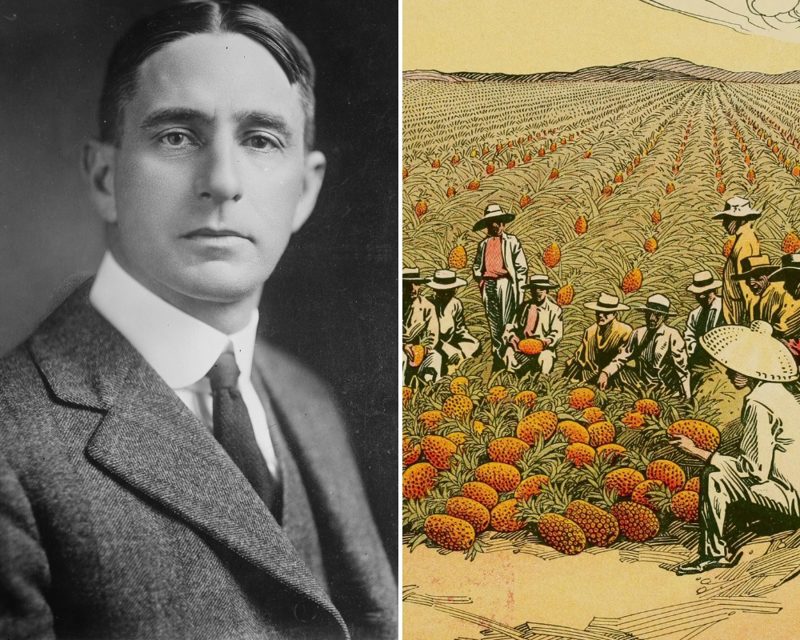
James Dole helped to meet the considerable demand for pineapples
Pineapples reportedly became such a common way for people to showcase their status that the fruit soon found its way into all sorts of designs. From wallpaper to tablecloths to napkins, it was hard to find something that didn't have pineapples on. People who couldn't afford the food would apparently buy things like porcelain dishes and teapots shaped like it just to benefit their reputation. So, you shouldn't be surprised if you ever visit an antique shop and see a lot of pineapple inspiration across the wares. Of course, it's no longer commonplace for people to walk around holding pineapples as a sign of wealth, so what happened? Basically, James Dole happened. He established a pineapple plantation in Hawaii in the 1900s that soon led to the Dole Food Company. As trade became quicker and easier, meeting the demand for pineapples was no longer as challenging, and the prices soon dropped.
Pineapples are still incredibly popular today. However, the greater supply of this fruit means you no longer have to pay thousands of dollars just to eat one. Evidently, that's changed the way we see this food, as people don't really think of them as status symbols anymore. Still, it's fascinating to know the luxurious history of the pineapple because it's something so many never would have expected to be true.
You May Also Like
 Food
A Beginner's Guide to Stocking a Pantry
 Food
How to Season Food More Confidently
 Food
Knife Skills That Make Cooking Easier