Where Did Bouillon Cubes Really Come From?

Bouillon cubes are one of those ingredients that many of us probably have in our pantries. Also known as “stock” or “broth” cubes in some places, these things are beloved for use in dishes all around the world. The fact that they’re affordable, easy to use, and provide excellent flavor explains why they’re so commonplace. However, what do we actually know about where Bouillon cubes really come from?
Perhaps it’s not something you’ve ever thought about when using them before, or maybe it’s a question that’s often on your mind when cooking, but you’ve never looked it up? Whatever the case, the history of this ingredient helps us to understand how it became such a beloved element of some of our favorite dishes.
Before bouillon cubes, people made powder for soup in various ways
Before bouillon cubes came to be, people found all sorts of ways to essentially create soups that they could turn into food with a bit of water. Apparently, in the 1300s, Magyar warriors in Hungary would create powder out of salted beef, which they could then carry around with them. They reportedly achieved this by boiling the meat until it fell apart, cutting it up, drying it in the sun, and then grinding it. People came up with creative techniques like this for centuries until the 1800s, when several European companies sought to make inexpensive portable soups. Those companies were Knorr, Maggi, and OXO, names that are still making waves to this day.
Big progress was made with bouillon products in the 1800s
One of the ways the companies achieved their goals was by concentrating beef solids into an extract. That’s what Justus von Liebig did during the middle of the 19th century. However, he ultimately had to source meat from Uruguay to make the process affordable. This resulted in the release of a liquid bouillon in 1899 with the brand name Oxo. Maggi, meanwhile, began to stand out with their bouillon cubes in the early 1900s after using hydrolyzed vegetable protein (HVP). This ingredient apparently stems from adding hydrochloric acid to plant matter and can offer a meaty flavor without actually using any meat.
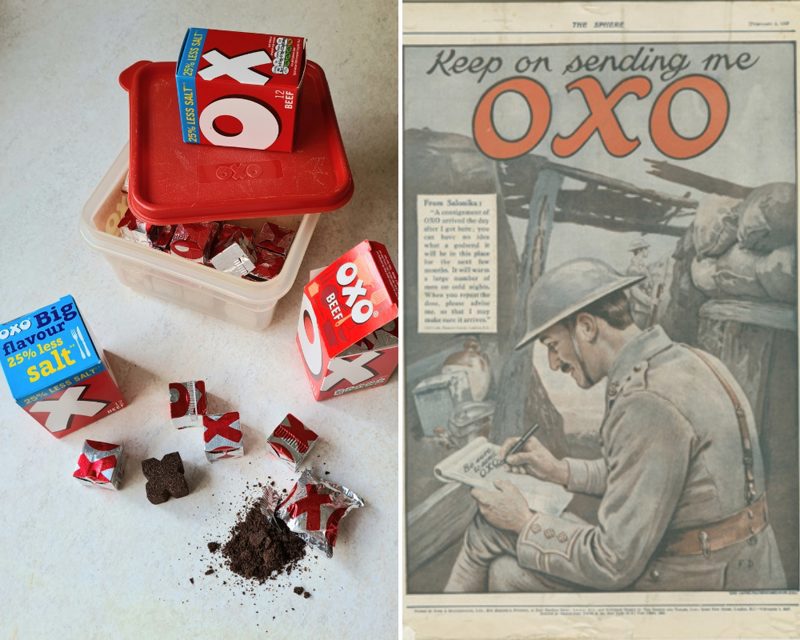
OXO and Knorr have generated huge sales over the last century
As part of their global marketing campaign, OXO reportedly advertised their bouillon cubes as being able to “make good dishes better.” They also suggested that the product helps with digestion and can assist the “development of a healthy physique and an active mind.” Consequently, these cubes became hugely popular in colonized countries, with sales of these ingredients still exceptionally strong. Supposedly, Knorr sells 600 of them every second and reportedly noticed a 70% rise in sales in the early days of the 2020 global health crisis. It’s not just OXO and Knorr that have seen immense success with their bouillon cubes over the last century or so, though.
Umami bouillon cubes had a major impact in the 20th century
Around the same time that this was going on, Carl Heinrich Theodor Knorr was reportedly experimenting with dehydrated foods, which led to the release of dried soups in the 1870s. Four decades later, Knorr reportedly debuted its first bouillon cube around the same time as OXO. Rather than utilizing real meat, these products relied on umami, a term that had recently been coined by Ikeda Kikunae in Japan. It was used to describe the flavor of amino acids that tasted like real foods without actually utilizing them. Soon enough, these cubes became global products, with the onset of World War I providing opportunities to supply millions of soldiers with this convenient ingredient.

Maggi has also had a major impact with its bouillon cubes
Maggi has also been a dominant force with its bouillon cubes, albeit in different parts of the world. These tend to be more prominent in parts of Africa, South America, and Asia, with the cubes tailored to local cultures. Different flavors and textures help to enhance beloved dishes in these parts of the world, from thieboudienne in Senegal to ayamase in Nigeria. There has been some reluctance to embrace these cubes from older generations, who have always used various fermented pastes in their stead. However, as making these is often a process in itself and can sometimes leave behind a pretty strong fragrance, many younger people prefer to use bouillon cubes.
The convenience of bouillon cubes and the fact that they can make a dish more flavorful has led to them becoming one of the world's most popular ingredients. Even with concerns about MSG and salt content, they still generate incredible sales year after year. Evidently, they’re something people just don’t wish to live without.
You May Also Like
 Food
A Beginner's Guide to Stocking a Pantry
 Food
How to Season Food More Confidently
 Food
Knife Skills That Make Cooking Easier