Do We Need To Be Tipping On Top Of Service Charges?

Tipping is a huge part of dining culture in America, with customers typically expected to leave behind up to 20% of the cost of their meal. Doing this ensures that the wait staff receives a decent wage, as their salaries are usually on the lower end of the scale. Unfortunately, not everyone feels inclined to leave a tip behind, and some of those that do avoid paying quite as much as 20%.
This has seemingly prompted more and more places across the US to start building other fees into the bill to ensure that their staff gets paid. It's something that is relatively common overseas and could soon become quite popular here. However, if a restaurant includes a service charge for the meal, do you still need to leave a tip? Apparently, the answer is yes, at least in some cases.
The current tipping structure leaves many employees at a disadvantage
Service charges are not a new concept. Whether they go by this name or something similar, like "auto-gratuity," "benefits surcharge," or "dine-in fee," they've been around for years. It's just that they haven't been that widespread in the US, as establishments have instead continued to rely on the traditional tipping model. Unfortunately, this tipping model can put employees at a significant disadvantage, as it allows employers to pay them as little as $2.90 an hour for their work. Relying on tips might not be so bad if everyone paid what's expected of them, but that doesn't usually happen. As a result, some restaurateurs have switched up their payment structure to make things fairer, using service charges to do it.
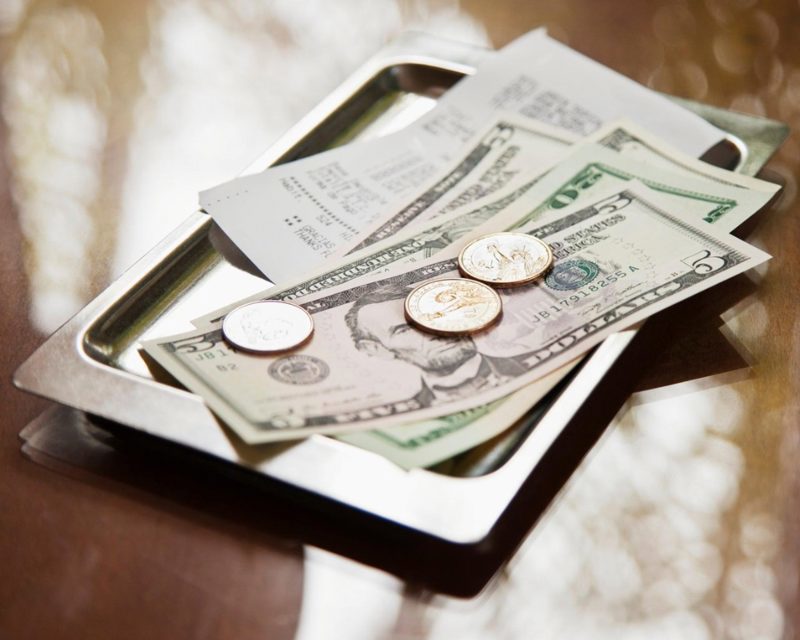
Staff problems have led to a need for better payment systems
Fair pay for wait staff is already starting to improve in some states like Washington, DC, where subminimum wage hikes are increasing the amount people get paid. Other places are eliminating the concept of subminimum wage altogether, ensuring that such low salaries simply aren't an option. However, this alone isn't enough to keep employees interested in working somewhere like a restaurant. Staff retainment is reportedly low right now, with many places even struggling to hire wait staff, let alone retain them. However, something that has helped to get people through the door is these service charges, which provide a higher, more consistent pay for employees than what they could have received previously. Of course, while these might be a benefit to the workers, customers aren't such a fan of them.
Some service charges are smaller, and still expect customers to tip
In a nation where tipping has become such a common part of the culture, it can be hard to adjust to seeing service charges on the bill. What makes things even more complicated is that they're sometimes referred to by different names, and they're not always consistent with one another, either. For instance, when the fee is referred to as "employee benefits" or "pay equity," it usually means that a tip is still expected on top of it. Places like Apothecary and Rye in Dallas have introduced this with an optional 3% benefits surcharge, and it's helped to bring in more money than before. While not everyone is a fan, claiming they feel "deceived" by it, many people have still paid up. Somewhere around 3-5% is reportedly standard for these fees, but some places do go higher, like at San Francisco's Che Fico, where it's controversially 10%.
Other service charges include a tip within the overall cost
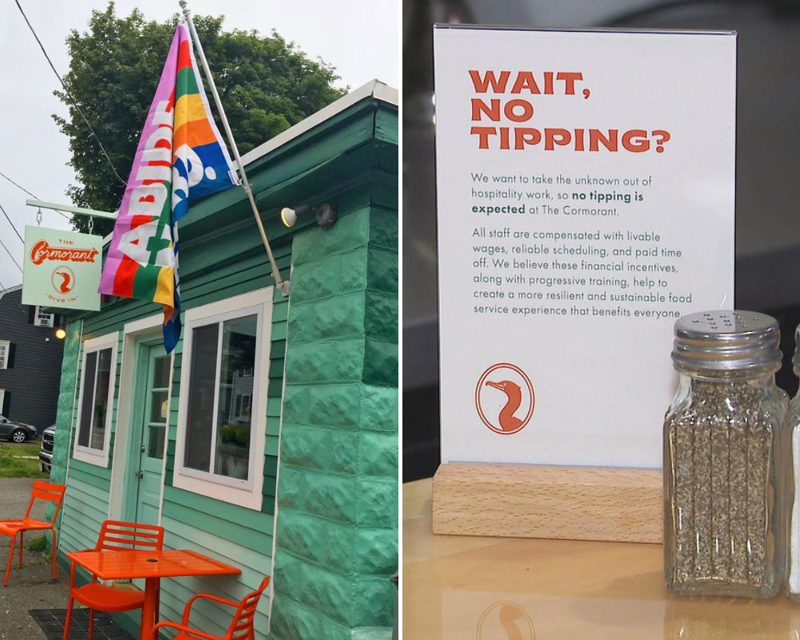
Another type of service charge to look out for is one that says it's "tip-free," "tip-included," or something along those lines. This basically means that the money you would have expected to leave behind as a tip has been factored into the cost of the meal. So, dishes tend to be on the more expensive side, which can be off-putting for those not accustomed to paying in this way. The Cormorant in Massachusetts is an excellent example of this, where one of their burgers might cost something like $16. As they advertise on the tables, though, this price reflects the cost of the food, labor, and operation, as well as a 20% tip. That money is then used to ensure that everyone is paid the same fair wage, which keeps people motivated to work. Evidently, it's a model that's done well for the restaurant, with customers even leaving behind smaller tips on top of the service charge.
It will take some time for the wider public to embrace this new way of paying, especially with so many restaurants doing things slightly differently. Hopefully, though, it will eventually become the norm so that wait staff can get the pay they deserve without having to rely on tips.
You May Also Like
 Food
A Beginner's Guide to Stocking a Pantry
 Food
How to Season Food More Confidently
 Food
Knife Skills That Make Cooking Easier